


In traditional finance, factor premia like value, momentum, and carry persist until balance-sheet-heavy institutions and sophisticated hedge funds arbitrage them away. In crypto, the underlying mechanisms that create these risk premia are the same, but the players are very different. With far fewer well-capitalized competitors and a market structure still in its adolescence, factor returns in digital assets are likely to be more persistent, not less. It’s the same reason automated market making and simple basis trades are profitable in crypto, whereas in equities or rates we would not expect an “off-the-shelf” bot to earn money.
We are living through the golden age of quant finance for digital assets: liquidity is now deep enough to support large-scale, long-term systematic strategies, yet the market remains inefficient enough that those strategies are not crowded away. The ethos of DeFi suggests these opportunities shouldn’t be limited to proprietary trading desks, but instead embedded into protocols and vaults accessible to all. That is precisely the vision behind Freeport, bringing institutional-grade quantitative strategies and structured investments to all.
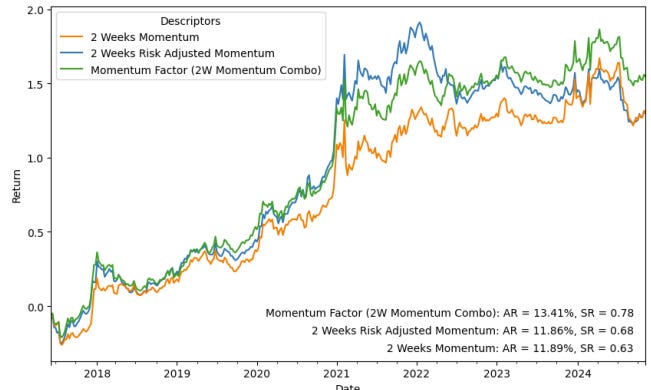
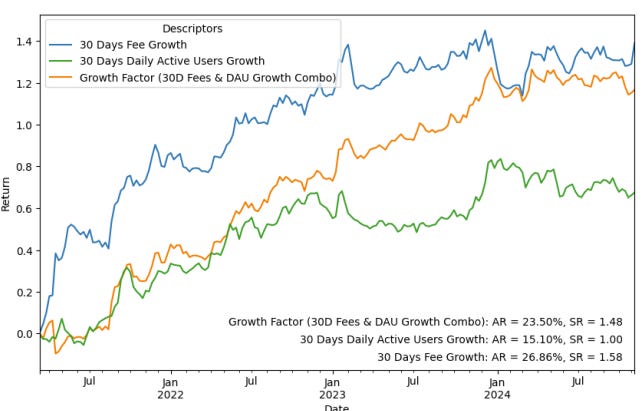
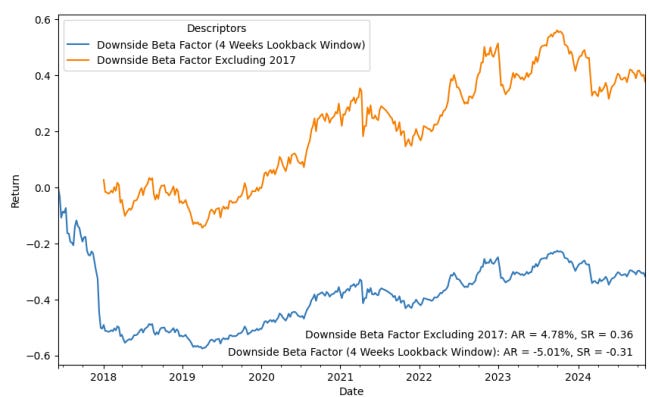
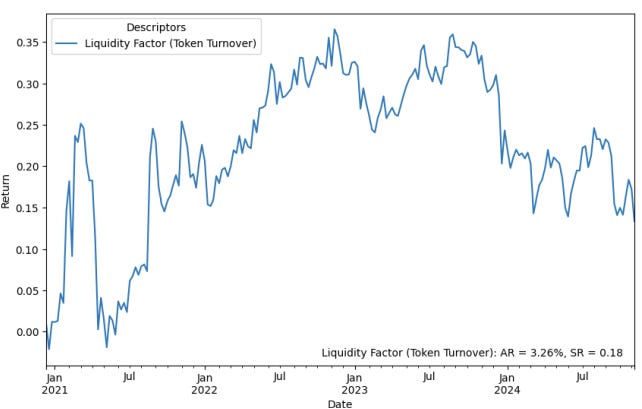
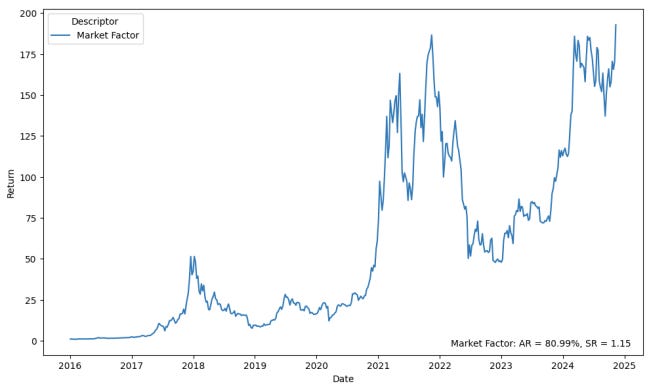
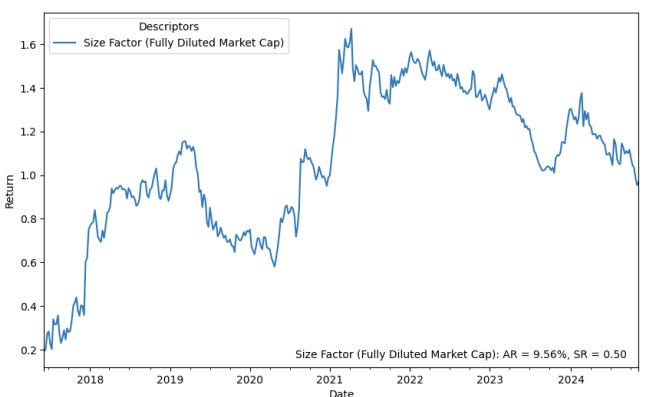
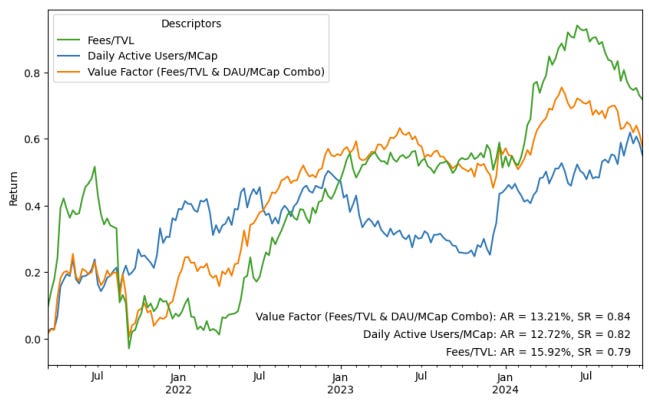
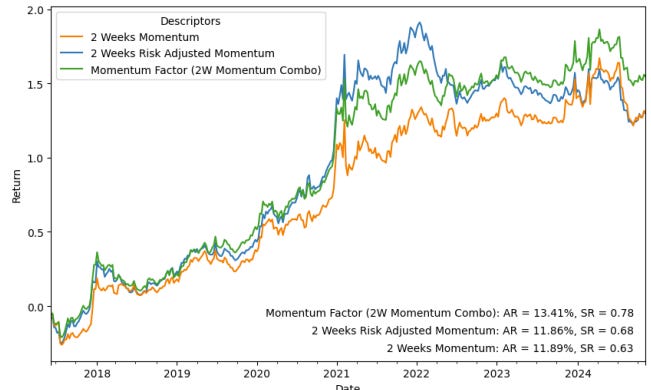
Graphs from A Factor Model for Digital Assets.
Blockchain Factors
An institutional study by CF Benchmarks in Nov 2024 proposes a cryptocurrency factor framework that mirrors the best of traditional asset pricing while embracing crypto‑native data. It tests seven factors: Market, Size, Value, Momentum, Growth, Downside Beta, and Liquidity, on a top‑50, liquid universe (stablecoins, pegs, and derived tokens excluded), using both time‑series and cross‑sectional methods. The model improves explanatory power meaningfully versus market‑only specifications and finds statistically significant risk premia across all seven factors, with time variation that tracks regimes. Key takeaways from the paper:
Universe & data. Focus on the 50 largest, sufficiently liquid assets; on‑chain descriptors (fees, TVL, DAUs), price/volume, and turnover; daily frequency since 2015. This is designed to make the premia replicable, not just statistically cute.
Seven factors that matter.
Market: cap‑weighted BTC/ETH proxy for systemic crypto beta.
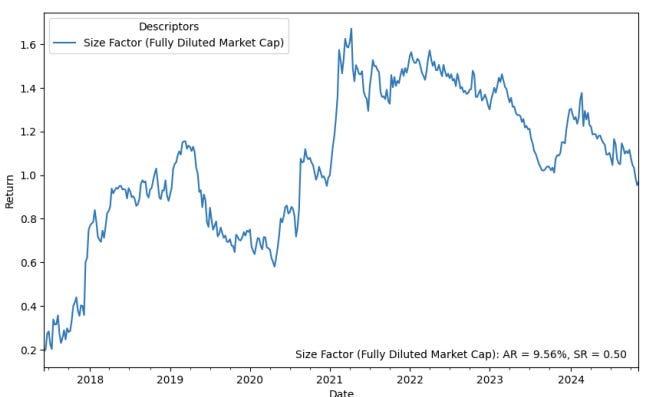
Size: inverse of fully diluted market cap (smaller outperforms larger).
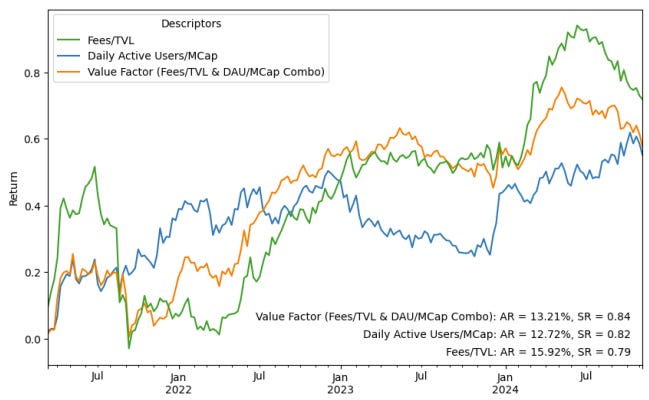
Value: z‑score average of Fees/TVL and DAU/Market Cap -a crypto‑native twist on productivity/valuation.
Momentum: two‑week returns (raw and risk‑adjusted), acknowledging faster regime shifts in crypto.
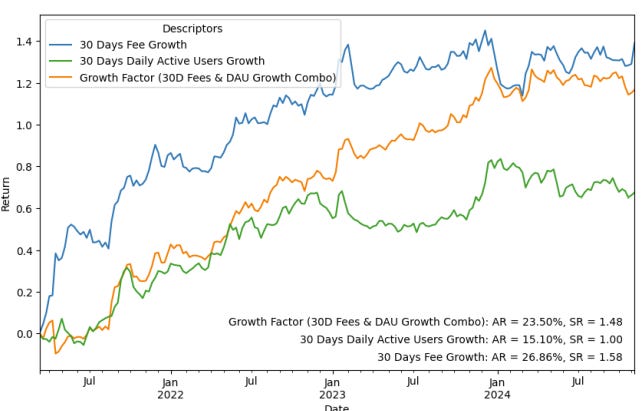
Growth: 30‑day fees and DAU growth as adoption/usage expansion.
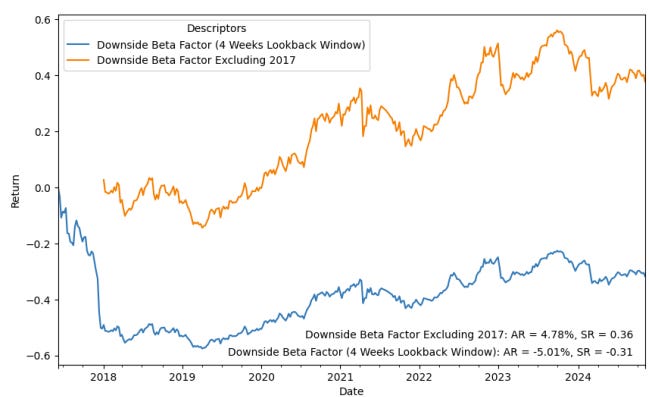
Downside Beta: sensitivity to market drawdowns.
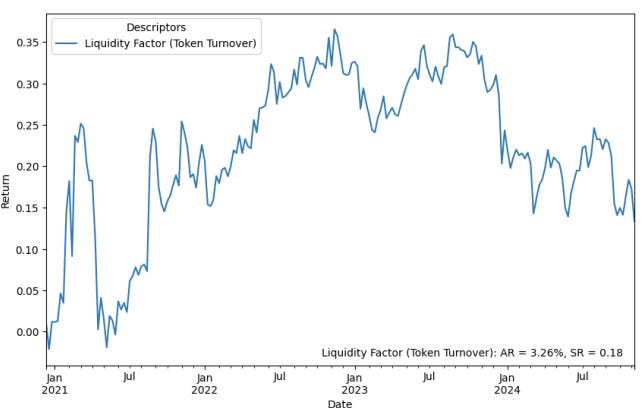
Liquidity: turnover relative to circulating float.
Results (time‑series): Adding factors beyond Market increases median R² from ~0.38 (market‑only) to ~0.45 for the full seven‑factor specification.
Results (cross‑section): Regressions show all seven risk premia are statistically meaningful over time, with weekly cross‑sectional R² often between ~20% and ~70%, underscoring both explanatory power and regime dependence.
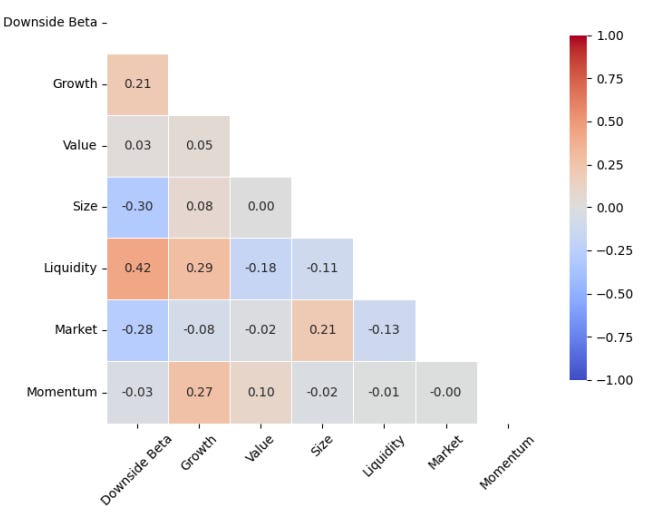
Low factor correlation. A factor correlation heatmap suggests limited redundancy, supporting multi‑factor portfolio construction.
Why does this matter? Because it gives allocators a language and a toolkit, grounded in crypto‑native data, to measure, budget, and package risk in digital assets, rather than treating everything as undifferentiated beta.
Factor Premia
Crypto factor premia should be stickier than in traditional assets, and we should expect this. The economic engines that mint premia, compensation for bearing risk, providing liquidity, and absorbing behavioral flow, exist in crypto just as in equities or credit. But crypto still has:
Fewer balance sheets capable of persistent, levered, cross‑venue arbitrage.
Fragmented microstructure (spot, perps, CEX/DEX, L2s), which raises implementation costs and slows the diffusion of capital into every niche.
Regulatory segmentation that prevents a “global” arbitrageur from seamlessly compressing spreads across jurisdictions.
Funding and borrow frictions (coin borrow, margin rehypothecation, staking interactions, collateral haircuts) that hinder one‑click neutralization of premia.
Higher idiosyncratic and regime risk that deters crowding, many institutions still size cautiously.
The upshot: premia last longer. You can see the family resemblance to TradFi (the factors exist), but the absence of saturated competition that slows the race to zero. CF Benchmarks’ evidence that multi‑factor models explain a material share of returns, and that factor premia persist over long samples while varying with regimes, is consistent with a market where opportunities are real yet not fully arbitraged away.
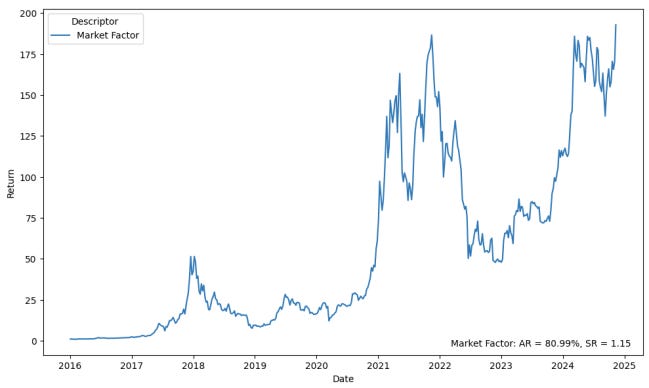
Market (BTC/ETH beta). The dominant driver of returns, positive trend, volatile.
Size (small > large). In a still‑emerging ecosystem, smaller, innovative assets can command higher expected returns, but with higher crash risk and turnover.
Value (Fees/TVL + DAU/MCap). Crypto‑native value: productive fees relative to capital and genuine daily usage; mirrors TradFi valuation metrics.
Momentum. Price trends work, but are regime‑sensitive and prone to “momentum crashes” around reversals and liquidity shocks.
Growth (fees & users growth). Picks up network effects and product‑market fit; naturally correlated with narrative cycles and developer mindshare.
Downside Beta. Measures an asset’s behavior on bad days; risk premium for large drawdown risk seems persistent except for 2017.
Liquidity (turnover). A double‑edged sword: illiquids can pay premia, but exits are harder, position sizing and rebalance discipline matter.
Packaging Premia
Turning factor research into something investors can use requires product and engineering choices. Here’s how we are thinking about some of them:
Universe & hygiene. Large‑cap, liquid, non‑pegged assets; consistent listing and data QC; venue filters and outlier handling.
Signal construction. Use descriptors that survive robustness checks (lookback sensitivity, in/out‑of‑sample, regime subsamples). Combine where it improves Sharpe/turnover.
Portfolio construction. Neutralize unintended exposures (e.g., beta), set factor risk budgets, and apply turnover constraints.
Rebalancing cadence. Weekly is a practical default for many crypto factors (faster signals degrade net of frictions; slower ones can be late).
Execution. Cross CEX/DEX, perps vs. spot, borrow/staking integration, slippage controls; use smart order routing and time‑of‑day liquidity patterns.
Risk. Drawdown limits, crowding monitors (capacity, basis/funding), regime detectors, and downside‑beta hedges.
On‑chain packaging. Vaults that expose factor sleeves (Value, Momentum, Growth, etc.), plus diversified multi‑factor portfolios. Transparent metrics, proof of reserves/positions, and auditable rebalances.
In addition to other customizable strategies and structured notes, we intend to build quantitative strategy vaults, mapping them to well‑defined factors, and automate guardrails, so allocators large and small can access institutional premia without running a trading desk.
The goal isn’t to promise the impossible; it’s to make the possible, systematic risk premia that already exist, broadly available with institutional care.
Disclaimer
The information provided on TheLogbook (the "Substack") is strictly for informational and educational purposes only and should not be considered as investment or financial advice. The author is not a licensed financial advisor or tax professional and is not offering any professional services through this Substack. Investing in financial markets involves substantial risk, including possible loss of principal. Past performance is not indicative of future results. The author makes no representations or warranties about the completeness, accuracy, reliability, suitability, or availability of the information provided.
This Substack may contain links to external websites not affiliated with the author, and the accuracy of information on these sites is not guaranteed. Nothing contained in this Substack constitutes a solicitation, recommendation, endorsement, or offer to buy or sell any securities or other financial instruments. Always seek the advice of a qualified financial advisor before making any investment decisions.